

9510
Factory-to-Enterprise Integration
ISA-95 Concepts, Models, and Application Principles
Connect plant operations. Inform business decisions.
Build a common understanding of manufacturing operations, information models, and enterprise integration.
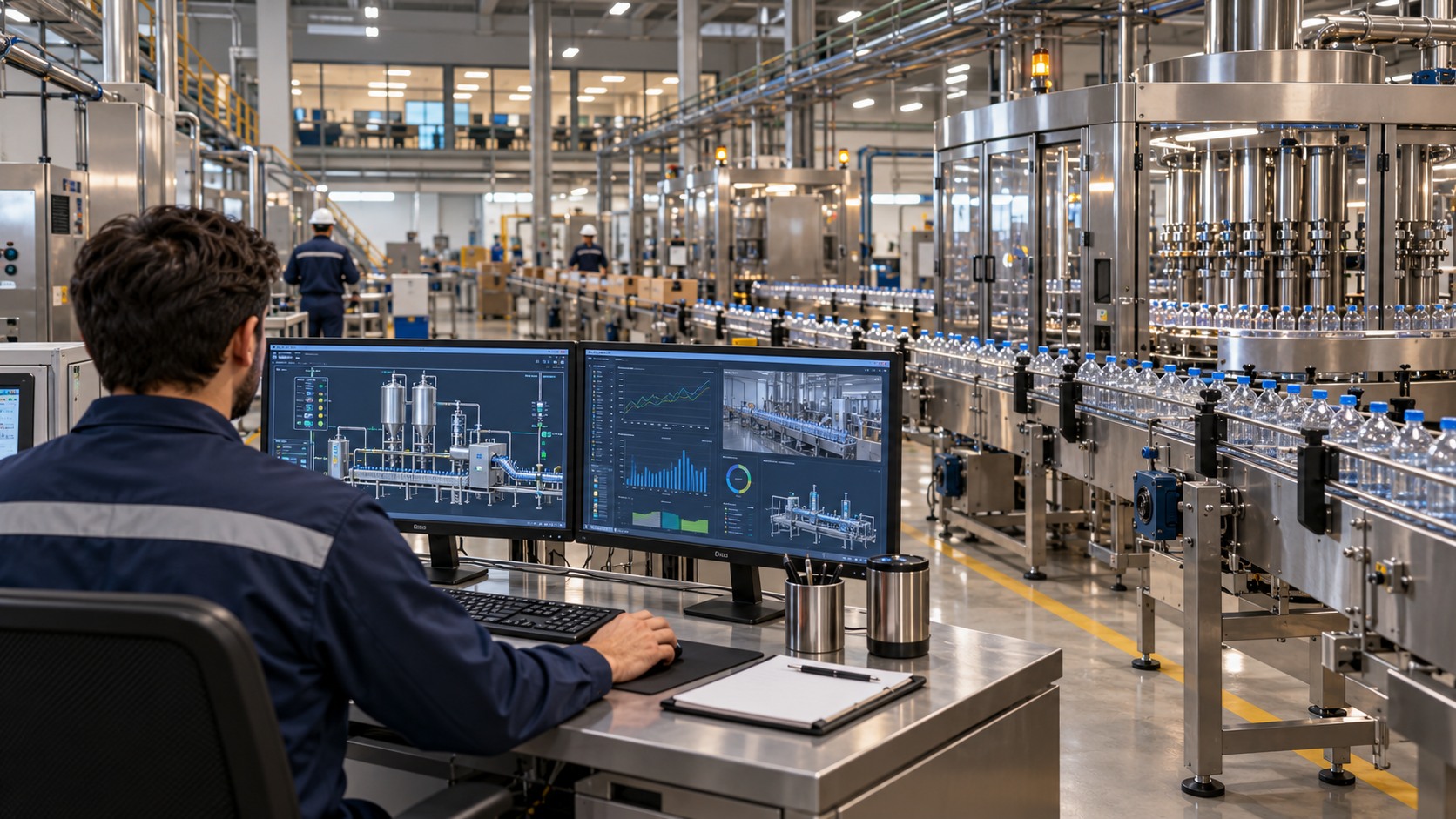
Course overview
Purpose. Practice. Value.
Advances in information systems and telecommunications have enabled the dynamic and efficient use of information, supporting powerful approaches to systematization and interoperability in production processes and organizational decision-making. Applied to industrial production, these developments extend beyond information processing toward automation that integrates manufacturing and management: production systems integration, or enterprise integration.
Comprehensive production automation must consider the process itself, the organizational structure, resources, and business management. Integrated systems therefore require models of organizational structure and behavior that make business process knowledge explicit.
Course at a glance
Course code9510
Duration16 hours
StandardISA-95
ProgramPlant Management
Download the datasheet
Course purpose
Study, understand, and discuss ISA-95 principles, models, and fields of application for functional identification and industrial automation project development, supporting improvements in production processes and organizational decision-making.
Learning objectives
- Understand and analyze the principles and terminology defined in ISA-95.
- Study the ISA-95 methodological approach for functional identification and the development of enterprise integration projects.
- Discuss technical implications, limitations, advantages, and fields of application of ISA-95 principles and models.
Detailed course syllabus
Four topic areas covering ISA-95 concepts, models, and manufacturing operations management.
01
Introduction
- Introduction to the course.
- General concepts of enterprise integration.
- Purpose of the ISA-95 standard.
- Basic ISA-95 terminology.
02
Hierarchical and functional models
- Overview of the ISA-95 standard.
- ISA-95 equipment hierarchy model.
- ISA-95 functional hierarchy model.
- ISA-95 functional data flow model.
03
Object models
- ISA-95 object models.
- B2MML schemas.
04
Manufacturing operations management
- Purpose of ISA-95 Part 3.
- General structure of ISA-95 Part 3.
- Generic activity model in ISA-95 Part 3.
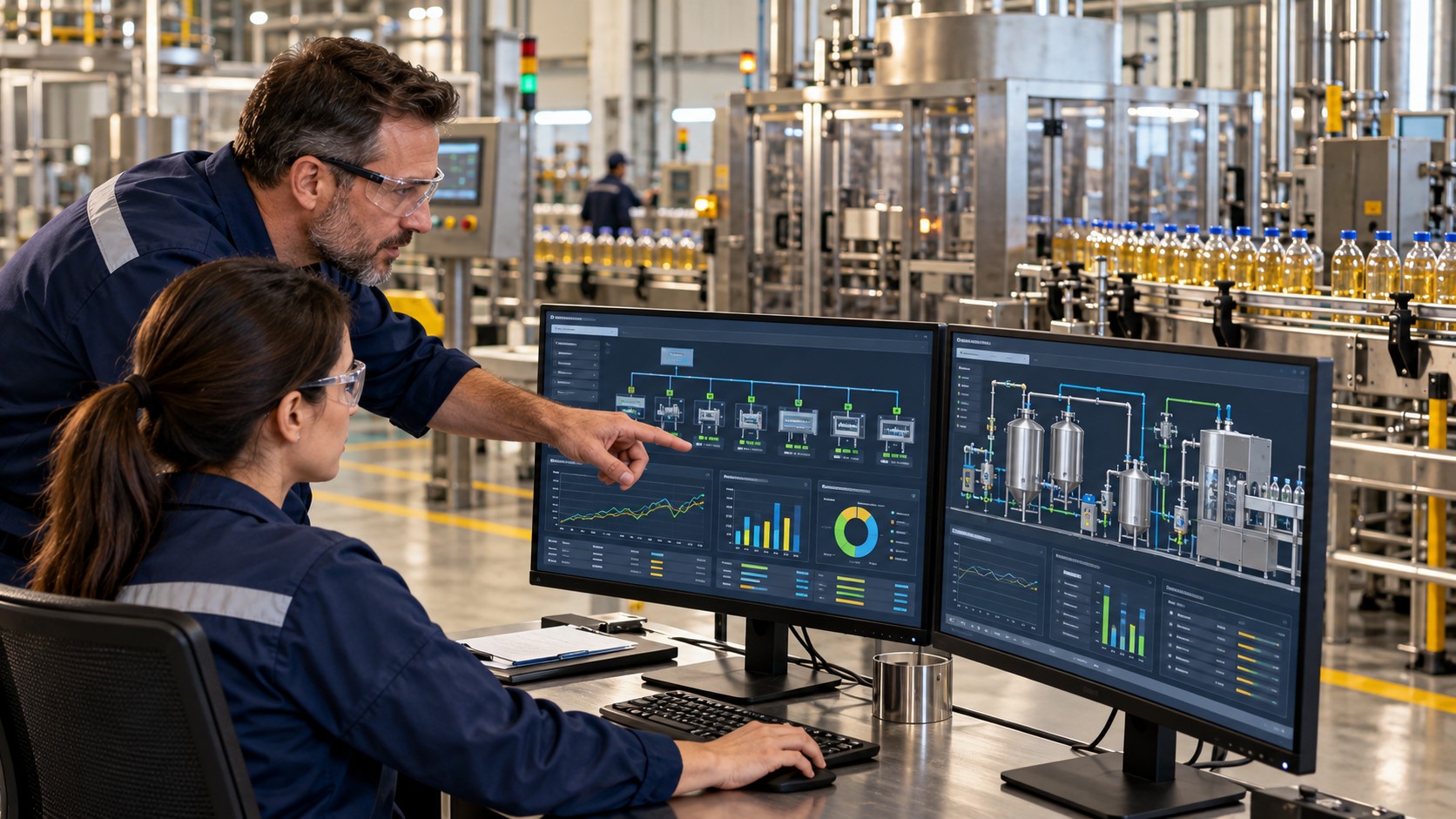
Learning approach
The course presents ISA-95 concepts and models to understand the flexibility of its principles and the diversity of applications across the different phases of enterprise integration projects.
Expected outcomes
Participants will be able to communicate using ISA-95 terminology, supporting more effective communication and decision-making in company processes. They will understand the ISA-95 models for documenting processes consistently and developing improvement proposals based on information consolidated through good manufacturing practices. This provides a practical tool for supporting the diagnosis of manufacturing operations management activities and processes.
Duration
16 hours
Focused on ISA-95 terminology, models, information structures, and manufacturing operations management.
Reference materials
- ISA. ANSI/ISA-95, Parts 1-4. The Instrumentation, Systems and Automation Society, 2004.
- ISA-95 Implementation Experiences. Momentum Press, 2010.
- ISA-88 and ISA-95 in the Life Science Industries. Momentum Press, 2011.
- F. B. Vernadat. Enterprise Modeling and Integration: Principles and Applications. Chapman and Hall, 1996.
- E. Chacon et al. Automatizacion integral de sistemas de produccion continua. LaSDAI, ULA, 2000.
- O. Rojas and E. Chacon. Estandar ISA-95. LaSDAI, ULA, 2007.
- MESA. Control definition and MES to controls data flow possibilities. MESA and International, 1995.
- ESPRIT. CIMOSA: Open system architecture for CIM. Research Reports ESPRIT, Volume 1, 1993.
- InTech technical articles and reports.
- Technical articles and reports from international ISA automation, systems, and instrumentation conferences.
Build your enterprise integration capabilities.
Request training information for yourself or your team.
